


Shannon Bunnett


Do you have a job which requires CSA-Approved footwear? Your daily work shoe is super important because of how many hours a day, per month you have them on your feet! Below find some additional information and brands which are consistently durable, fit well, and offer good support to compliment your custom foot orthotics or over-the-counter inserts you wear.
If you have a wide foot and/or claw toes or hammer toes, a deeper fitting and wide fitting toebox is a must have feature to ensure your toes are not rubbing against the steel or composite toe of the boot or shoe.
The shank which protects against plantar punctures can offer additional stability. To test for torsion stability, try to twist your workshoe while holding the heel and toebox area; a more supportive shank and sole will mean there will be less twist and therefor, more support, especially for side to side movements or when walking on rough and uneven terrain. The boot or shoe should also then have a compliment rocker at the front to assist with propulsion or toe-off.
The sole of your workshoe should be taken into consideration. Sole material for many running shoe styles tends to be softer for a more cushioned feel but the compromise is durability. The same would be said for anti-slip rubber soles - while they protect against slips, they are naturally a softer type of rubber and when used on abrasive surfaces such as sidewalks and pavement they will wear prematurely. A deeper lug on the sole will offer more traction on different terrain.
6-8 inch styles versus low cut - some may offer some ankle stability unless the boot material stretches and deforms. There would actually be more stability from the shank than the height of the boot. However, a higher boot will offer protection around the lower leg and prevent materials getting into the footwear such as liquids, dirt, different types of shavings.
How often should you replace your work footwear? Definitely every year, however, after 6-8 months turn them over and check the sole for wear and punctures - some chemicals can break down the rubber quicker which would affect the lugs for traction.
Also check the upper of the boot or shoe - some materials will stretch and have more give which can affect the fit of the footwear. Consider the environment, footwear worn outside in wet conditions or in the food industry could be impacted by moisture and contribute to break down of the footwear materials.
Workboot brands which have a good fit in the toe box, durable outsole, and are orthotic-friendly
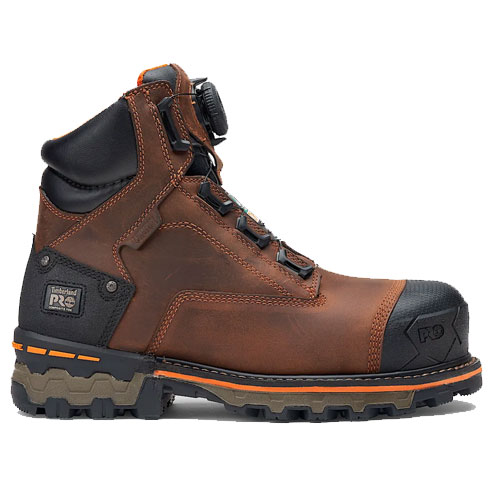
Timberland Pro Series
Composite toe workboot, wide fitting, deep toe box, Vibram Fire & Ice sole for traction and flexibility
Mellow Walk
Maddy 6” boot, starts at an E width for women, slip resistant sole, composite toe
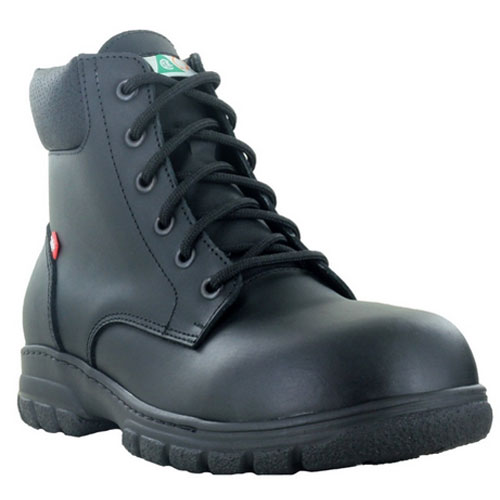
https://ca.mellowwalk.com/category/mellow-walk-safety/womens/425128-maddy-esr/black
Mellow Walk Men’s Quentin 3E lowcut lace up
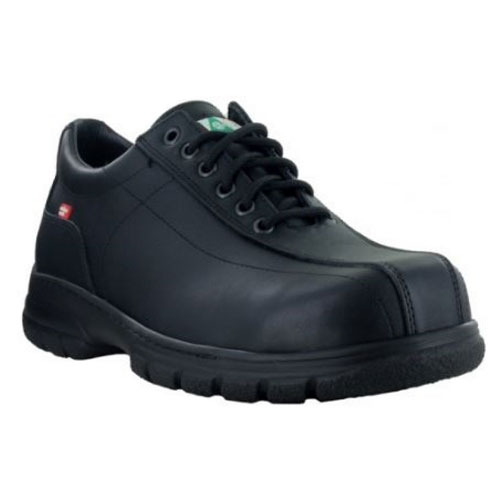
https://ca.mellowwalk.com/category/mellow-walk-safety/mens/570239-quentin-esr-3e/black
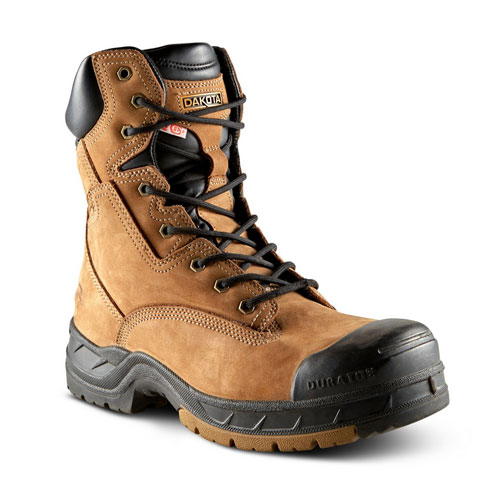
Dakota
Start at wide width, durable outsole
Royer
Canadian-made since 1964, many models with composite toe, waterproof versions, and wide fitting
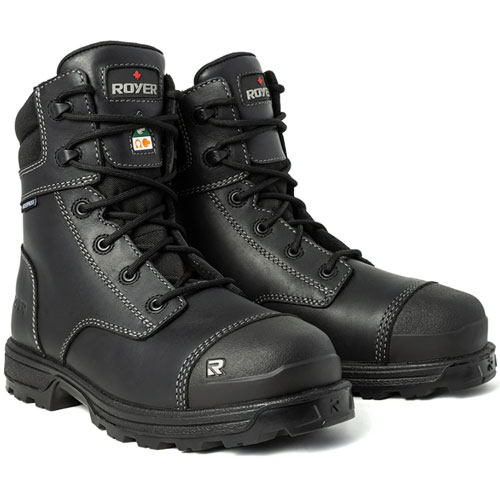
https://royer.com/products/4605tp?_pos=7&_fid=b9897ff9d&_ss=c


